Showing posts with label autonomous energy. Show all posts

Saturday, September 24, 2022

And Again...

Again and again...

In May of this year more than 150,000 customers across Ontario left without power three days after a powerful storm tore through the province, knocking down power lines and trees, forcing several schools to close and leaving behind significant damage.

Hydro One said the damage from the storm included more than 1,400 broken poles, 300 broken crossarms and nearly 200 damaged transformers as well as "countless trees."

In Ottawa, Mayor Jim Watson said "most" customers still without power should have service restored within the next two to three days. But he warned it will be several weeks before the storm damage is fully cleaned up.

Joanna Eyquem, managing director of climate-resilient infrastructure for the Intact Centre on Climate Adaptation at the University of Waterloo, said efforts to slow climate change mean we are becoming more reliant on electricity and it is more important than ever to safeguard the power grid against major breakdowns.

"We can't have everything kind of falling apart because we have power outages as well because it just makes us less resilient," she said.

 A 2019 climate vulnerability study done for Hydro Ottawa warned that storms with winds above 120 kilometres an hour posed an extremely high risk for the city's power grid.


And now.
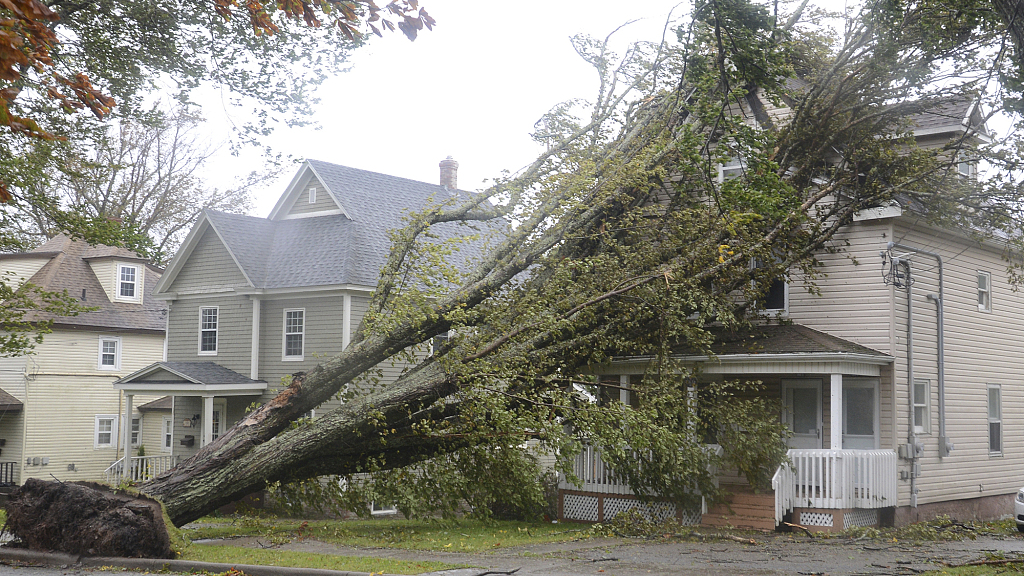
Powerful storm Fiona made landfall in eastern Canada's Nova Scotia early on Saturday, the U.S. National Hurricane Center (NHC) said, with maximum winds of 90 miles (144 kilometers) per hour.

"Fiona is expected to affect portions of Atlantic Canada as a powerful hurricane-force cyclone today, and significant impacts from high winds, storm surge, and heavy rainfall are expected," the NHC said.

Although a gradual weakening was forecast during the next couple of days, Fiona was expected to maintain hurricane-force winds until Saturday afternoon, the NHC said.

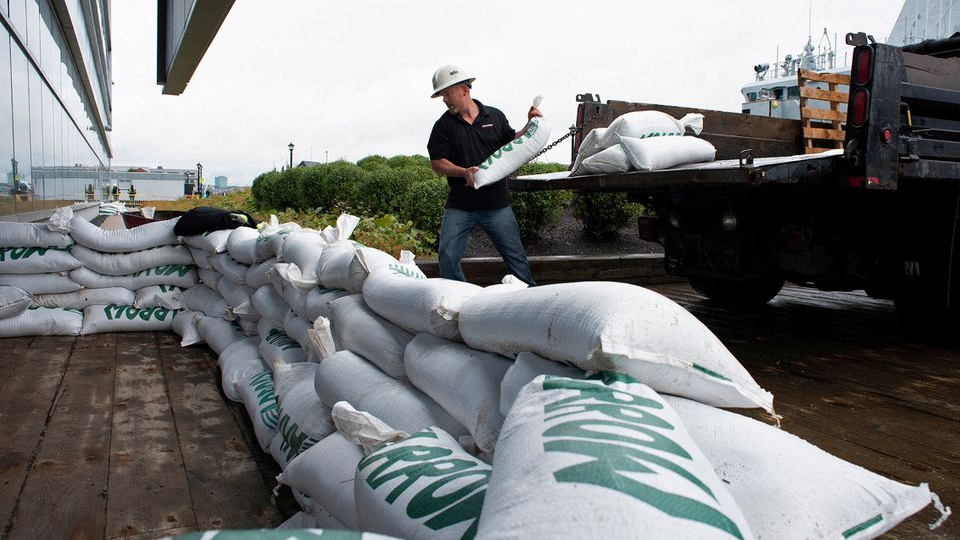
The storm has blown over trees and powerlines and leaving hundreds of thousands of homes and businesses without electricity, according to Reuters on Saturday.

Some 79 percent of customers, or 414,000, were without power in Nova Scotia, and 95 percent, or 82,000, had lost power on Prince Edward Island, utility companies said. The region was also experiencing spotty mobile phone service. Police across the region reported multiple road closures, Reuters said.

Formerly designated a hurricane, the storm battered Caribbean islands earlier in the week, killing at least eight people and knocking out power for virtually all of Puerto Rico's 3.3 million people during a sweltering heat wave. Nearly a million people remained without power five days later.

Canadian Prime Minister Justin Trudeau delayed Saturday's departure for Japan, where he was to attend the funeral of former Prime Minister Shinzo Abe, to receive briefings and support the government's emergency response, Press Secretary Cecely Roy said on Twitter.

A hurricane warning was in effect for much of central Nova Scotia and Prince Edward Island, home to more than 150,000 people, and parts of Newfoundland, the Miami-based NHC said.

Canadian Hurricane Center meteorologist Ian Hubbard said on Friday the effects of Fiona would be felt over a wide area.

"The center of it is one thing, but the weather that's associated with it in terms of the rain and where all the strong winds are, it's going to be over a much larger area," he said.

"Many, many places away from the center of the storm are still going to be seriously impacted from this," said Hubbard.

Canadian authorities sent emergency alerts in Nova Scotia and Prince Edward Island, warning of severe flooding along shorelines and extremely dangerous waves. People in coastal areas were advised to evacuate.

The storm could prove more ferocious than the benchmarks of Hurricane Juan in 2003 and Hurricane Dorian in 2019, Canadian Hurricane Center meteorologist Bob Robichaud told a briefing.

The country's two largest carriers, Air Canada and WestJet Airlines, suspended regional service starting Friday evening.

...

There is a solution: Autonomous Mobile Energy System (AMES). An array of the AMES modules would be located in areas prone to energy disruptions and wait in a "sleeping" mode. Then, when the moment comes, they are activated and deployed automatically, providing much needed energy for rescue and relief workers, residents and businesses. The AMES, developed by Ascent Systems Technologies, is currently in the final round of the Canadian Department of National Defence (DND) contest developing a prototype for the Canadian Armed Forces (CAF) relocatable temporary camps. Most recently Ascent was awarded a contract to develop a prototype of the autonomous environment monitoring and security system for the DND assets in the Arctic.


Monday, September 27, 2021

The U.S. military wants road mobile nuclear reactors that can fit into a C-17. They could be better off with the Autonomous Mobile Energy System


The U.S. military’s secretive Strategic Capabilities Office, or SCO, is asking for potential vendors to submit proposals for small mobile nuclear reactors to help meet ever-growing demands for power during operations in remote and austere locations. This request for information comes as the U.S. Army, in particular, is looking to extend the amount of time its units can operate independent of established supply chains, but portable nuclear power could introduce new risks to the battlefield.

SCO first announced that they were looking for “information on innovative technologies and approaches” relating to a possible future “small mobile nuclear reactor prototype design” on FedBizOpps, the U.S. government’s main contracting website, on Jan.18, 2019. The organization posted an amended version of the notice, which outlines a “multi-phase prototype project” as part of what it is calling Project Dilithium, four days later. 

“Energy usage during contingency operations will likely increase significantly over the next few decades,” the latest version of the request for information explains. “The modern operational space has amplified the need for alternative energy sources to enable mobility in forward land based and maritime military operations".

SCO basic requirements envision a reactor that can generate between one and 10 megawatts of energy, less than the average output for even a small research reactor, and weigh less than 40 tons. The final design would need to be portable by semi-trailer truck, ship, or a U.S. Air Force C-17A Globemaster III cargo plane.

The goal is to develop a system that personnel can set up in three days or less and shut down and pack up in less than a week. The reactor itself would remain functional for at least three years without needing new fuel.

There are a number of potential concepts already in various stages of development that could meet SCO’s requirements. The U.S. Department of Energy’s own Los Alamos National Laboratory (LANL), in cooperation with the Westinghouse power company, has been working on one design called MegaPower for some time now. Westinghouse is separately working on its own eVinci micro reactor design.

The MegaPower reactor can generate at least one megawatt of power for up to 10 years and meets the SCO’s demands for how long it takes to set up and tear down. More importantly, the design uses what are known as “heat pipes” to both keep the system cool and generate power, eliminating the need for complex and potentially hazardous water-cooling arrangements.

Another option in development is Filippone and Associates LLC’s Holos , a unique gas-cooled modular reactor. Named after the Greek word meaning “whole,” the design only “goes critical” and works as intended when a certain number of modules are positioned together, touching off the nuclear reaction. Each self-contained modular has its own turbine generator that then produces power.

There are other small nuclear reactors either available or in development, such as the URENCO U-Battery and StarCore's micro reactor, but these are not necessarily intended to be rapidly repositioned from one place to another. They could require significant modifications to meet the portability requirements that SCO is looking for.

At present, deployed U.S. military forces rely almost entirely on established power grids and their own fossil-fuel powered generators to generate the required power to keep bases and forward operating sites up and running. Especially at remote and austere locations, this requires a steady supply of diesel or other fuels either by ground convoy or aircraft.

This can quickly become a costly proposition and demands additional resources to safeguard those supply lines. Any disruption can severely degrade deployed units’ combat effectiveness and put them at risk of losing communications and situational awareness if the power goes out or has to be rationed.

These are the kind of concerns that led the U.S. Army to announce in November 2018 that it was looking for ways to ensure its brigade combat teams would be able to fight for a week without getting resupplied. This is twice as long as those units can operate without fuel and other supplies at present.

The other branches of the U.S. military have their own requirements for this kind of portable power, as well. The Air Force and the Marine Corps are both actively exploring new concepts for rapidly establishing bases that could benefit from the addition of mobile power and energy sources.

However, one of the biggest potential problems with battlefield nuclear power continues to be safety. There are obvious concerns about what happens when you begin deploying dozens, if not hundreds of small nuclear reactors into areas that are, by definition, full of hostile threats.

But even if the reactor itself cannot catastrophically fail, something that may be a tall order to ensure in austere conditions regardless of the design, powering remote and austere bases with nuclear power could run other risks. If hostile forces end up destroying the reactor, it could potentially lead to the hazardous dispersal of radioactive material. 

While Autonomous Mobile Energy System (AMES) designed by Ascent Systems Technologies can deliver much smaller amount of energy than nuclear reactor, it is much smaller, lighter (less than 2.5 ton fully charged) therefore can be delivered to hard to reach places, including by a helicopter, it can be deployed automatically in minutes rather than days, but most importantly, has no hazardous radioactive materials and does not present an attractive target for an adversary. 


Saturday, September 25, 2021

Spaceopal completes new GSS site in the Kerguelen Islands


Spaceopal on behalf of the European Union Agency for the Space Programme (EUSPA) recently completed the construction of the new Galileo Sensor Station (GSS) in the Kerguelen Islands, in the French Southern and Antarctic Lands (TAAF), in the middle of the Indian Ocean. The installation of the infrastructure now begins, followed by integration and testing of the GSS apparatuses, which will continue until May 2022, when it will become part of the Galileo GSS network.

The Galileo GSS network includes antennas all over the world essential for real-time control and monitoring of the signal precision and quality of Galileo satellites, as well as establishing their orbits with precision.

The new infrastructure in the Kerguelen Islands replaces the previous one, built in the earliest stages of the programme, as part of an update of the world-wide network of the Galileo Ground Segment required to permit Full Operational Capability of the European navigation and positioning system, guaranteeing an accurate, precise signal at all times for users all over the world.


An unprecedented challenge

Situated in the subantarctic region of the Indian Ocean, about 3300 km off the coast of Madagascar, with a population of about 150 scientists, researchers and soldiers, the Kerguelen Islands, under French jurisdiction, are among the world’s most isolated places. This may be why they are also known as the Desolation Islands.

When EUSPA signed a contract with Spaceopal for the implementation of the system in 2019, installation of the new GSS appeared to be a major logistical challenge.

Under the leadership of the European Union Agency for the Space Programme (EUSPA), Spaceopal supported by its industrial team for these actions composed of the Telespazio group, SES and TAAF coordinated the work as the Galileo Service Operator (GSOp), interfacing with the supplier of GSS apparatuses, Thales, while ensuring the project’s consistency with GSS sites all over the world.

Autonomous Mobile Energy System (AMES) developed by Ascent Systems Technologies appears to be an ideal fit for such remote locations as Kerguelen, particularly for applications requiring uninterrupted source of energy with no easy way to supply fuel on a regular basis.


Saturday, June 19, 2021

How The Battery Revolution Will Power Our Future

 U.S. President Joe Biden has made batteries a critical component of his carbon-neutral strategy. He insists on American production of modern batteries rather than relying on imports from China. Chinese companies, including Contemporary Amperex Technology Co. Limited (CATL), BYD Auto, and Hefei Guoxuan High-Tech produce 79 percent of the world's batteries. American manufacturers make only seven percent. 

According to innovator Elon Musk, batteries are the key to our future. Their development led to the technical revolution that brought smartphones, tablets, and electric vehicles to the world. Therefore, it is surprising that the science behind the lithium-ion batteries driving the modern world has remained essentially unchanged for more than three decades. 

The prototypes of lithium-ion batteries appeared in the 1980s. Then the physicist John Goodenough suggested using lithium cobaltite in batteries. In 2019, he received the Nobel Prize for his idea. 

A BloombergNEF study found that the average price of lithium-ion batteries fell from $688 to $137 per kilowatt-hour between 2013 and 2020. They predict that by 2023 prices will be close to $100 per kWh. The average price of batteries for electric vehicles (EV) was $126 per kWh. Thus, the cost of the battery pack in the total vehicle price dropped to 21 percent. By 2030, due to new technological advances, the cost of batteries can drop to $58 per kWh. 

However, lithium-ion batteries have serious disadvantages. Among them are a high fire hazard, sensitivity to temperature differences, self-discharge, and aging. Many still remember the story of the Samsung Galaxy Note 7 series smartphones that suddenly caught fire. It is this property that prompted airlines to require the carriage of lithium-ion batteries exclusively in carry-on baggage. Another liability is that lithium-ion batteries used in electric vehicles contain hundreds of kilograms of metals and materials such as graphite, cobalt, and high-purity nickel. When mined and processed, it can cause significant pollution and increase carbon dioxide emissions. 

For example, an average battery of a light EV requires about 20 kg of nickel and up to 20 kg of cobalt in the cathode. Of the metals used, nickel is critical as it helps the batteries store more energy and reduces the need for the more expensive cobalt. Tesla accounted for more than half of all nickel used in the European electric vehicle industry last year, and Musk selects its supply as a concern. Tesla plans to produce three terawatt-hour batteries by 2030, which will deplete most of the world's nickel production at current levels. 

According to Fastmarkets, cobalt prices, as the world's most expensive metal, rose to $42 per kg in March 2021. Analysts predict that by the end of 2021, they will reach $57, and in 2024 they will reach $80. The primary deposits of cobalt are located in the Democratic Republic of the Congo. 

Therefore, it is not surprising that companies are actively developing new types of batteries. For example, General Motors (GM) has partnered with SolidEnergy Systems to manufacture Ultium batteries for its electric vehicles. These will include a liquid electrolyte, graphite-based anodes, and cathodes with a mix of nickel, cobalt, manganese, and aluminum. As a result, the price of batteries will drop by 50-60 percent, and their weight will decrease. As a result, GM expects to reduce the cost of storing 1 kWh of electricity from $150 to $100 by 2025. 

More and more electric vehicles in China use alternative lithium iron phosphate (LFP) batteries. They are cheaper and less toxic but have a lower capacity. Such batteries are developed by Tesla Model 3, the Chinese automaker BYD, and Volkswagen. But so far, LFP batteries account for only 14 percent of the market, and by 2030 this figure will be from 15 to 20 percent. 

Tesla and Volkswagen are also promising to cut cobalt use in the coming years. Last year Elon Musk held a special online presentation called Tesla Battery Day. He announced that Tesla would begin mass production of a new generation of batteries that will be much more powerful and durable than the current ones within three years and cost half the $25,000. Tesla's new 4680 battery pack will be six times more potent than its predecessors and five times more energy-efficient. Moreover, its size will be only 46x80 mm.

Lithium-ion batteries' severe flaws and shortcomings make it understandable for the excitation around radically new ways to develop solid-state batteries. The technology will use solid electrodes and a solid electrolyte instead of the liquid or polymer gel electrolytes found in lithium-ion batteries. Radically new technology promises to address many of these environmental and safety concerns. 

In addition, this innovative generation power supply will store energy at a much higher density. Electrolytes also serve as a battery separator, a vital component of a lithium-ion battery, reducing the risk of fire and the number of raw materials needed. 

The pursuit of shorter charging times and longer mileage without increasing the cost of battery packs and the risk of fire are the most striking improvement trends in modern batteries. Removing these limitations is key to making the battery revolution genuinely irreversible. 


There is something to be said about the different kind of energy storage - thermal energy storage, particularly those using phase-change materials (PCM).  They don't suffer practically any of the problems which plaque electrical batteries - they are completely fire-safe (the most of their content is water), the number of charge-discharge cycles is unlimited, and the depth of discharge does not affect their efficiency. It makes them a perfect addition to the solar thermal systems (STS) which also do not use rare metals and therefore not subject of the same supply bottleneck that PV and computer chips are.


Autonomous Mobile Energy System (AMES) developed by Ascent Systems Technologies implements an optimal combination of both PV-battery and STC-PCM. All controlled by a smart control system using machine learning software. It works as a self-charging energy storage and provides uninterrupted source of clean energy with no fuel or connection to the power grid.


Monday, February 15, 2021

Blackouts Cascade Beyond Texas in Deepening Power Crisis


Blackouts triggered by frigid weather are spreading across the central U.S. and into Mexico as an energy crisis that’s already brought Texas’s power grid to its knees deepens.

As more than 2 million homes in Texas are already without power, the operator of an grid spanning 14 states from North Dakota to Oklahoma ordered utilities to start rotating outages to protect the system from failing amid surging demand for electricity. The outages have also spread into Mexico.

“In our history as a grid operator, this is an unprecedented event,” the grid operator, called the Southwest Power Pool, said in a statement Monday.

The brutal cold striking Texas -- ironically the capital of the U.S. energy industry and home of some of the world’s largest oil and gas companies -- is emblematic of a world facing more unpredictable weather due to the rising impact of climate change. The outages underscore how as the globe moves away from fossil fuels into an all-electrified system that relies more and more on renewable energy, the grid becomes more vulnerable too.

(How long are we going to wait to realize that we need get rid of centralized grids and pipelines? Isn't time to move to the decentralized distributed autonomous energy?)

Such weather conditions are very rare in much of Texas, and they have unleashed chaos on the ground. In Houston, the state’s largest city, roads are iced over and there are long lines to refill household propane canisters. Firewood is selling out.

Besides the human impact, the cold is wreaking havoc on the energy industry itself. Oil production in the Permian has dropped by 1 million barrels a day, helping U.S. crude prices to trade above $60 a barrel for the first time in more than year. The region’s industrial plants built to cope torrid summers rather than arctic weather, and the biggest U.S. oil refinery went offline on Monday, reducing the supply of gasoline and other fuels.

Large swaths of Dallas, Houston and other cities have been plunged into darkness as extreme cold and surging demand for heat pushes generators to the brink. The outages began as controlled, rolling power cuts but have cascaded into prolonged blackouts in some areas.

(If we wouldn't rely on the centralized grid and the pipe with gas, that wouldn't happen. Even if energy would be lost in some places, those would be localized and not cause a cascade effect!)

“We anticipate we will need to continue these controlled outages for the rest of today and perhaps all day tomorrow,” Dan Woodfin, a senior director for the Electric Reliability Council of Texas, which managed the state’s power grid, said during a briefing Monday.

In Mexico, at least 400,000 homes, businesses and other users lost power as the cold in Texas triggered a natural gas shortage and forced power plants offline. About 60% of those impacted had their power restored by midday, according to the grid operator, Cenace.

In the last six months, extreme temperatures have led to rolling blackouts in the two most populous U.S. states. In August, California grid operators shut off power when record heat push demand beyond capacity, and now Texas’ record cold has led to the same result.

The extreme cold appears to have caught Texas’s highly decentralized electricity market by surprise. Power plants with a combined capacity of more than 34 gigawatts were forced offline overnight, including nuclear reactors, coal and gas generators and wind farms, Woodfin said. It’s not clear why, he added.

Wind power in particular appears to have been a major victim of the weather conditions, with turbine blades rendered inoperable due to ice, a phenomenon that reduces efficiency can ultimately stop them from spinning. Wind generation has more than halved to 4.2 gigawatts.

(Usually birds and bats are the victims of wind turbines. Wind power must be a victim, as icing presents a danger for equipment and people. Moreover, even short operation with iced blades will require their replacement if not immediately, but much sooner than it would be needed otherwise, completely cancelling the promise of wind turbine efficiency. This is of course the most serious concern for large grid-connected wind farms.)

Power is going to continue to be cut across the state through Monday and potentially into Tuesday morning until enough generators come back online, Woodfin said.

“Every grid operator and every electric company is fighting to restore power right now,” said Bill Magness, head of the Electric Reliability Council of Texas, which runs the state’s grid.

These are the first rolling blackouts caused by cold weather since 2011 in Texas. Spikes in electricity demand usually happen in summer in Texas when air conditioning use rises. A loss of frequency on the grid has caused 30 gigawatts of generation to halt. Many stations will have been undergoing scheduled maintenance, leaving the grid more exposed during unusually large spikes in demand.

Parts of Texas were colder than Alaska, according to the National Weather Service. The temperature at 5 a.m. in Houston was 18 degrees Fahrenheit (-7.8 degrees Celsius), matching the reading in Anchorage. In the Dallas-Fort Worth area it was 5 degrees Fahrenheit (-15 degrees Celsius).

Frigid temperatures and a parade of storms in the U.S. follow other instances of extreme winter weather this year that have snarled ports and upended energy markets in Asia and Europe. Texas, which isn’t accustomed to winter’s full fury, is getting a big taste. President Joe Biden declared a state of emergency, mobilizing federal assistance to aid local response efforts.

Power crunch

The average spot price for power across the Texas grid hit the state’s $9,000 per megawatt-hour price cap shortly after 9:30 a.m. local time. LNG exports from the U.S. also plummeted after the freeze shut ports and wells, and oil production also took a hit, with Permian oil production plunging by as much as one million barrels a day. West Texas Intermediate futures rose by as much as 2.5%, above $60 a barrel for the first time in more than a year.

The cut to crude supplies is threatening to unleash a rush for everything from propane to heating oil, fuels that are used in mobile heating devices.

Odessa in West Texas, one of the largest cities in the Permian Basin, still has power, but San Antonio has lost power with rolling blackouts lasting 10-15 minutes, according to sources on the ground.

Houston may pick up as much as 2 inches (5 centimeters) of snow overnight, along with ice and sleet, the National Weather Service said. It will get hit by another storm bringing ice and freezing rain Wednesday.

“It is going to be a cold week,” said David Roth, a senior branch forecaster at the U.S. Weather Prediction Center. “The southern plains are in a cold pattern and it is going to take a while for them to break out of it.”

------------------

Autonomous on-site energy generation and storage is clearly a way out of this kind of crises which are going to be more frequent and more severe with the global climate change that is happening.

Original source: bloomberg.com (highlighted text is mine)


Thursday, January 7, 2021

U.S. Disaster Costs Doubled in 2020, Reflecting Costs of Climate Change


U.S. Disaster Costs Doubled in 2020, Reflecting Costs of Climate Change

The $95 billion in damage came in a year marked by a record number of named Atlantic storms, as well as the largest wildfires recorded in California.

 U.S. Disaster Costs Doubled in 2020, Reflecting Costs of Climate Change

 Hurricanes, wildfires and other disasters across the United States caused $95 billion in damage last year, according to new data, almost double the amount in 2019 and the third-highest losses since 2010.

The new figures, reported Thursday morning by Munich Re, a company that provides insurance to other insurance companies, are the latest signal of the growing cost of climate change. They reflect a year marked by a record number of named Atlantic storms, as well as the largest wildfires ever recorded in California.

 Those losses occurred during a year that was one of the warmest on record, a trend that makes extreme rainfall, wildfires, droughts and other environmental catastrophes more frequent and intense.

 “Climate change plays a role in this upward trend of losses,” Ernst Rauch, the chief climate scientist at Munich Re, said in an interview. He said continued building in high-risk areas had also contributed to the growing losses.

Damage in the aftermath from Hurricane Laura in Iowa, La., in October.

Topping the list was Hurricane Laura, which caused $13 billion in damage when it struck Southwestern Louisiana in late August. Laura was one of the year’s record number of 30 named storms in 2020; 12 of those storms made landfall, another record. The storms caused $43 billion in losses, almost half the total for all U.S. disasters last year.

In addition to the number of storms, the 2020 hurricane season was unusually devastating because climate change is making storms more likely to stall once they hit land, pumping more rain and wind into coastal towns and cities for longer periods of time, Mr. Rauch said.

The next costliest category of natural disasters was convective storms, which includes thunderstorms, tornadoes, hailstorms and derechos, and caused $40 billion in losses last year. The derecho that struck Iowa and other Midwestern states in August caused almost $7 billion in damage, destroying huge amounts of corn and soybean crops.

Wildfires caused another $16 billion in losses. Last year’s wildfires stood out not just because of the numbers of acres burned or houses destroyed, Munich Re said, but also because so much of that damage was outside of California. Some 4,000 homes were damaged or destroyed in Oregon alone.

The new numbers come as the insurance industry struggles to adjust to the effects of climate change. In California, officials have tried a series of rule changes designed to stop insurers from pulling out of fire-prone areas, leaving homeowners with few options for insurance.

Homeowners and governments around the United States need to do a better job of making buildings and communities more resilient to natural disasters, said Donald L. Griffin, a vice president at the American Property Casualty Insurance Association, which represents insurance companies.

“We can’t, as an industry, continue to just collect more and more money, and rebuild and rebuild and rebuild in the same way,” Mr. Griffin said in an interview. “We’ve got to place an emphasis on preventing and reducing loss.”

The data also shows another worrying trend: The lack of insurance coverage in developing countries, which makes it harder for people there to recover after a disaster.

The single costliest disaster of 2020 was a series of floods that hit China last summer, which according to Munich Re caused $17 billion worth of damage. Only 2 percent of those losses were insured, the company said.

Similarly, Cyclone Amphan, which struck India and Bangladesh in May, caused $14 billion of damage, “very little of which was insured,” according to Munich Re. Of the $67 billion in losses from natural disasters across Asia last year, only $3 billion, or 4.5 percent, was covered by insurance.

Without insurance, Mr. Rauch said, “the opportunity to recover fast after such an event is simply not there.”

=====

Even better insurance is to be prepared. A small footprint Autonomous Mobile Energy System (AMES) can be delivered to any location in the world, rapidly deployed and start producing clean energy, without requiring any fuel supply or connecting to the grid, in an uninterrupted way.


Monday, October 12, 2020

The Era of Energy Mobility

It used to be when we did not have to move stuff in order to get energy for our needs.

Then came the industrial revolution. We discovered efficiency and convenience of steam engines and factory machines. Since then we started making energy further and further from where we need it. We erected dams on rivers far from cities, we dug and drilled the earth for something we could burn for energy - coal or oil. And we started moving huge amounts of stuff (through pipelines, with tankers, over power lines etc.) in order to get energy where we need it, spending energy to do so, and losing a big portion of it along the way. If you were asked to design the energy process from the scratch, would you choose a complicated system involving getting raw fuel (oil, coal) in one part of the planet, bringing it to the place we can process it to usable form (refined fuel), then move it again huge distances so it could be burned to generate energy? And then we need to transmit that energy (in electricity form) long distances again to the places where we use it. Permanent renewable sources - solar plants and wind farms - cut some steps but can't avoid other - we still need to move energy from the producer to the consumer, with the same losses, plus added complexity of the grid control and security.

What do you do if the grid is down or pipeline jeopardized? What if you need energy in a different place, especially where there is no grid - do you want to pull the power lines with you? We live in a wireless world - why do we still rely on steel and copper to deliver energy? You may ask: do we have a choice? Yes we do.

Autonomous Mobile Energy System (#AMES) is such a choice. It can be delivered to any location in the world and provide an uninterrupted source of clean energy on demand, then moved to another place if needed. 


Dr. Paul Jaffe from the US Naval Research Lab (NRL) says that today, a confluence of advances at NRL and elsewhere presents an unprecedented opportunity to develop two potentially revolutionary energy technologies: power beaming and space-based solar. Delivering energy without moving or employing mass and the prospect of collecting clean, continuous, abundant sunlight in space and distributing it globally present compelling capabilities for remote installation energy resupply, disaster response and many other applications. #AMES module is an ideal platform to build upon the ground segment of such space-based solar power system.

Modular architecture of the #AMES module makes it flexible allowing them when deployed over the remote area to be used as temporary cell towers, or nodes of the ground network for the internet-over-the-satellite system, such as Starlink, being currently deployed by SpaceX. 


In the mean time, if there is a source of waste heat, such as waste processing or a commercial operation, #AMES can serve as a thermal energy battery able to store excess energy and then use it for heating spaces or other purposes. 

Microsoft is experimenting with the underwater data server for the purpose of autonomy and efficient cooling. It is designed in the form of a cylinder of the size fitting the standard shipping container. Thus, Microsoft is convinced, it could be deployed to remote places like islands, or disaster areas to support relief efforts. Why not in the remote Northern areas with their natural cooling? Incorporated in the #AMES module, they could sink all of the waste heat into the onboard thermal energy storage to be then directed for heating and other useful purposes.

It's time to move away from moving energy around - we can get energy where and when we need it!