Friday, March 3, 2023

Unorthodox Technology

Much of the Western military hardware used in Ukraine sounds familiar to any student of 20th-century warfare: surface-to-air missiles, anti-tank weapons, rocket launchers and howitzers. But Ukraine’s use of Western information technology, including artificial intelligence (AI) and autonomous surveillance systems, has also had a powerful, if less visible, impact on Russian forces. Commercial vendors supply Ukrainian troops with satellites, sensors, unmanned drones and software. The products provide reams of battlefield data which are condensed into apps to help soldiers on the ground target the enemy. One American defence official calls them, appreciatively, “Uber for artillery”.

Behind this new form of warfare are some of the most unconventional minds. Everyone knows about Elon Musk, whose rocket company SpaceX put their Starlink satellites at the service of Ukraine. There are some other iconoclastic entrepreneurs. One of them is Palmer Luckey, a 30-year old who in 2017 co-founded Anduril, a maker of surveillance towers, drones, unmanned submarines and an AI-driven system that supports them, called Lattice. It provides  autonomous systems to Ukraine. 

The other  is Alex Karp. His Denver-based company Palantir, builds digital infrastructure to help clients manage large amounts on data, particularly on security threats and other. Alex claims that Palantir changed the way Ukrainian troops target the enemy, and even the nature of counter-terrorism.Palantir is supporting Ukraine both on the ground and as a part of NATO's intelligence network.  

Both companies, to a lesser or greater degree, are linked to Peter Thiel, famous hedge fund manager and venture capitalist. (To him belongs the quote: "We dreamed of flying cars but we got 140 characters"). Mr. Thiel chairs Palantir, and his Founders Fund was an early backer of Anduril (both names echo Peter's love of J.R.R. Tolkien). Using different business models, both highlight how sclerotic the traditional system of "prime" defence contracting has become. They offer intriguing alternatives.
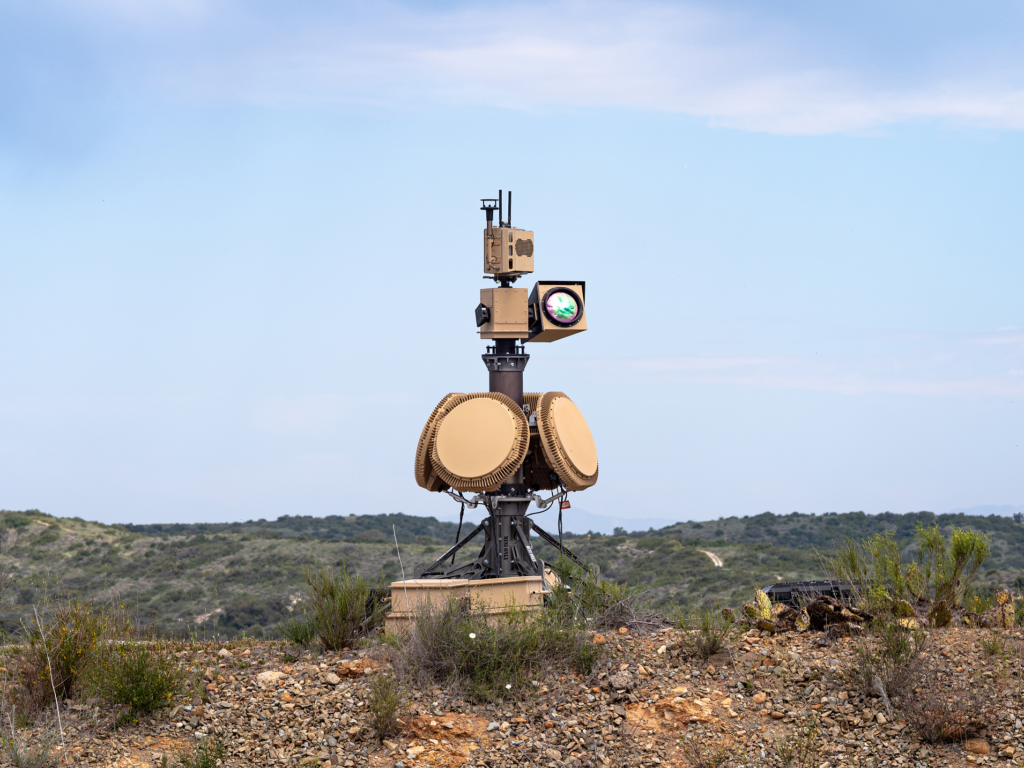
 

Like a prime contractor, Anduril sells to military customers. But unlike defence giants such as Lockheed Martin and Northrop Grumman, it does so while taking all the R&D risk on its own shoulders. Palmer Luckey is a born innovator. As a teenager, he invented the Oculus virtual-reality headset that he later sold to Facebook for $3bn. His business acumen is sharp. He and his executives have no time for Pentagon's traditional "cost-plus" procurement system. Though it may be necessary for big projects like fighter planes and aircraft-carriers, they say, in general it distorts incentives, creating a risk-averse, expensive and slow-moving defence juggernaut. Rather than waiting for government contracts, Anduril creates what it thinks defence departments need, and uses iterative manufacturing and a lean supply chain to make products quickly and relatively cheaply. It is fiercely competitive. Compared with the prolix, PowerPoint-heavy bidding process for prime contractors, Anduril relishes the cut-and-thrust of "shoot-offs", or competitions in which the US Department of Defence (DOD)  tests commercial products against each other. A similar concept is used by the Canadian Department of National Defence (DND) with the IDEaS program. Anduril's success rate is high. In 2020 it won a big contract to provide surveillance towers on America's border with Mexico. In 2022 it secured $1bn from DOD to provide autonomous counter-drone systems. It is building underwater vehicles the size of buses to patrol waters of Australia.
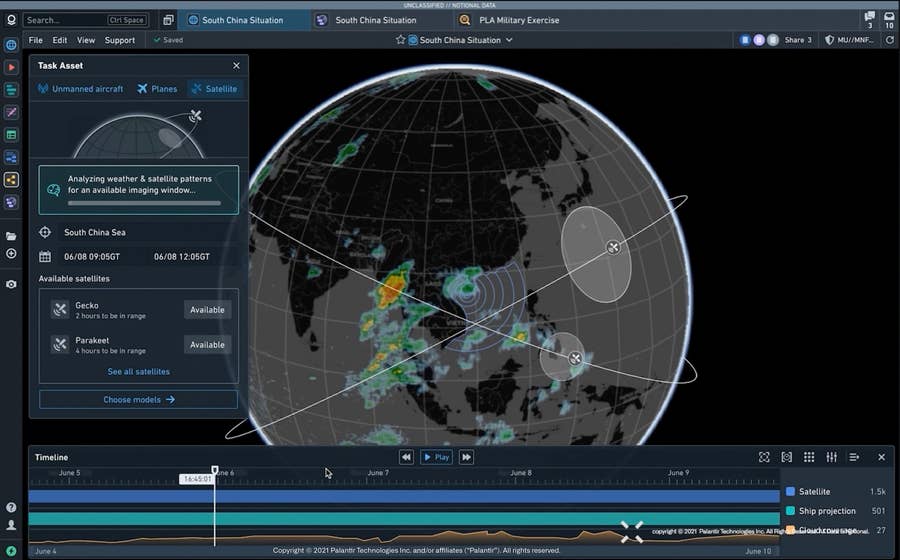

 Screenshot of Palantir Gotham

Palantir achieved the mysterious status with its technology. It works for some private clients, as well as governments, albeit only ones friendly with America. Both on a battlefield and in security business, its software cuts through the thickening fog of data to enable quick decision-making. Other dual-use technology firms are increasingly winning defence contracts.  The Pentagon's Defence Innovation Unit (DIU), set up in 2015, support s a big increase in the use of commercial technologies, such as AI, autonomy and integrated systems, to speed up the responsiveness to global threats. (Source: The Economist, February 18, 2023)

The Canadian IDEaS (Innovation for Defence Excellence and Security) program strives to achieve a similar goal. Its Pop Up City contest puts a number of competitors against each other to evaluate and select the best integrated utilities system for the Canadian Armed Forces (CAF) relocated temporary camp. Ascent Systems Technologies is one of the contestants in the final round of the competition. Also through the IDEaS program, Ascent was awarded a contract to develop a prototype of the autonomous monitoring and surveillance system for the DND assets in the Arctic, based on its flagship AMES platform. The AMES is a dual-use system - it can be used for a number of military as well as civilian applications, including providing quick support to Ukraine's damaged energy infrastructure.


Sunday, November 6, 2022

Who is Next?

 KYIV, Ukraine — As they struggle to maintain an electricity grid heavily damaged by Russian missiles, officials in the Ukrainian capital, Kyiv, say they have begun planning for a once unthinkable possibility: a complete blackout that would require the evacuation of the city’s approximately three million remaining residents.

The situation is already so dire, with 40 percent of Ukraine’s energy infrastructure damaged or destroyed, that municipal workers are setting up 1,000 heating shelters that can double as bunkers while engineers try to fix bombed-out power stations without the needed equipment.

 To try to keep the grid from failing altogether, Ukraine’s national energy utility said on Saturday that it would continue to impose rolling blackouts in seven regions.

 A darkened street in Kyiv, Ukraine, at night, with only a few lights coming from an apartment building.

The tremendous strain on Ukraine’s ability to provide power is the result of the widespread bombardment by Russian forces of critical energy infrastructure across the country, a tactic that analysts say President Vladimir V. Putin of Russia has resorted to as his troops have suffered repeated setbacks on the battlefield.

The damage caused by the Russian strikes has heaped new suffering on Ukraine’s civilians and forced officials to reckon with the possibility that further damage could render them unable to provide basic services.

 As Ukraine struggled to cope with Russian attacks on its infrastructure, a municipal worker on Friday installed a backup water line from Kyiv to the suburb of Hostomel that was powered by gravity and would function without electricity.

“We understand that if Russia continues such attacks, we may lose our entire electricity system,” Roman Tkachuk, the director of security for the Kyiv municipal government, said in an interview, speaking of the city.

Officials in the capital have been told that they would be likely to have at least 12 hours’ notice that the grid was on the verge of failure.

“If there’s no power, there will be no water and no sewage,” says Tkachuk. 

As winter approaches, the city is preparing 1,000 heating shelters that can also protect civilians from Russian missiles. Most are inside educational facilities, but the authorities have asked that their precise locations not be reported lest they become easy targets.

A fire truck parked outside a school in Kyiv that is being outfitted as one of 1,000 heating shelters the city plans to establish for people to brave the winter without basic infrastructure.

(Lack of heating during the coming winter can cause major humanitarian disaster. Portable, capable to be transported in small shipping containers, autonomous power and heating systems, such as the one developed by Ascent Systems Technologies, is a solution which could save thousands, potentially tens of thousands, lives).

When Russia launched its latest barrage of more than 50 cruise missiles on Monday, most were shot down, Ukrainian officials said. But those that got through hit power plants and substations, immediately depriving thousands of people of power.

Ukraine’s national electric utility, UkrEnergo, confirmed on Saturday the need to continue rolling blackouts, saying they were necessary to “reduce the load on the networks, ensure sustainable balancing of the power system and avoid repeated accidents after the power grids were damaged by Russian missile and drone attacks.”

The cuts would affect Kyiv and its environs, and the regions of Chernihiv, Cherkasy, Kharkiv, Poltava, Sumy and Zhytomyr. Who is next?

The power damages in Ukraine affects not only Ukraine but also EU where significant portion of the Ukrainian power used to be exported. That exacerbates their own problems and already sky-high electricity prices. The power grid can also be hacked, if anyone needs a proof, look no further than hacking of the pipeline in the Eastern US in 2021 and previous multiple hacker attacks on the grid of Baltic republics and Ukraine. 

So who is next? Is it Vienna, or maybe it is Paris?  It doesn't have to be a war - it can be a strong solar flare, or sever storm. 

Isn't it a final wake up call to start re-thinking the entire approach to the centralized energy supplies and move towards decentralized, robust energy system?

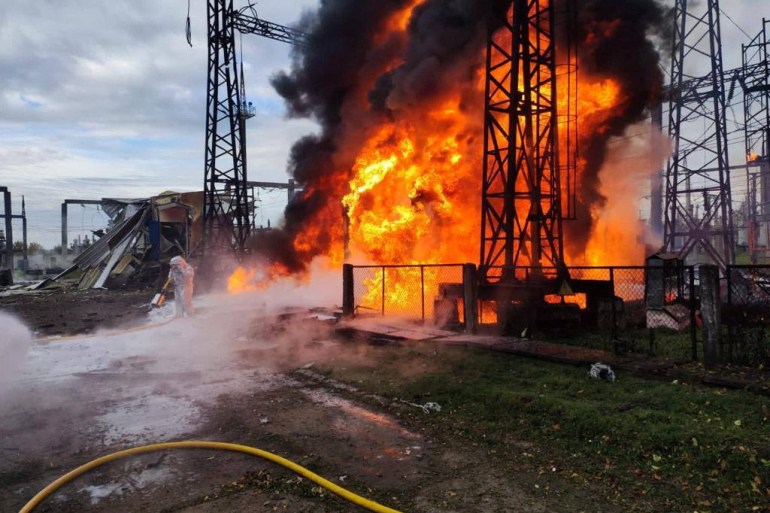
Firefighters work to put out a fire at energy infrastructure facilities, damaged by a Russian missile strike, as Russia's attack on Ukraine continues, in an undisclosed location, Ukraine October 22, 2022 

Sources: The New York Times and Al-Jazeera

Sunday, October 2, 2022

Replacing the North Warning System: Strategic competition or Arctic confidence building?


Canada and the United States have begun planning a replacement for the North Warning System, the network of air defence radars across the top of the continent. Jointly funded and operated through NORAD, though located primarily in Canada, the system’s renewal comes in the context of a persistent Cold War revivalism that presages a preoccupation with national defence and geostrategic competition. But another feature of the current context is broad recognition that the changing physical environment and increasing access to and activity in the Arctic drive a priority need for enhanced domain awareness within the region to support public safety, law enforcement, and sovereignty protection, while also serving national defence and strategic stability.


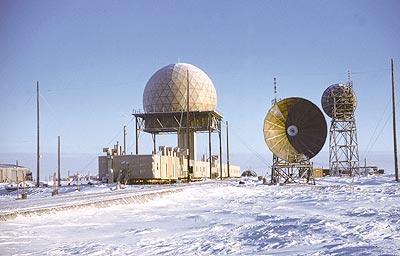
Replacing the North American Arctic’s North Warning System (NWS) will be an extended and expensive process, with construction unlikely to be completed before the mid-2030s. The chain of Arctic radar stations monitors air approaches to the northern mainland territories of Canada and the US. It came on line in the early 1990s as a replacement for the Cold War inspired Distant Early Warning (DEW) Line of northern radars built in the mid 1950s when the Soviet Bomber threat loomed large. The DEW Line never had, and the NWS does not now have, any capacity to monitor hostile aircraft over extended distances; the idea was and is to draw a line in the snow to serve as a tripwire signalling an attack from the north and heading south. 

In those early Cold War years Canada shared US concerns about the bomber threat (the Canadian Arctic being the route by which the Soviet aircraft would head to the US heartland), but a major factor in building the DEW Line was the recognition that the Americans required it and would not, and could hardly be expected to, tolerate a blind spot in the Canadian north that would deny them early warning of an attack en route to the lower American mainland – in other words, if Canada would not cooperate in building a line of radars, the US would find its own ways of monitoring Canadian territory for signs of Soviet attack, with major implications for Canadian sovereignty. 

Canada understood that in order to avoid that kind of American “help” it would have to support and be part of a credible system to monitor Canadian territory on behalf of both countries (hence, the frequently noted “defence-against-help” reality for Canadian defence policy). It’s a condition that also applied when the NWS was built, and it still applies. Canada shares a continent with the Americans and is simply obliged to make a credible contribution to its defence – and the American definition of credible is the one that counts.   

Soon after the DEW Line was built in the 1950s, the Soviet bomber threat was much degraded, with attention turning to the post-Sputnik Soviet missile threat. By the mid-1980s the old Soviet bomber threat was certainly not a central concern in the minds of North American defence planners, but the Soviet Union did continue to maintain a substantial strategic bomber capability that regularly, even if infrequently, patrolled within range of North America. Added to that, cruise missiles capable of being fired from those bombers were emerging. Thus, by the early 1990s, the DEW line was replaced with the NWS radars, supplemented by American Airborne Warning and Control System (AWACS) aircraft that were permitted to operate in Canada, and long-range radars on the Pacific and Atlantic coasts.  

That was more than two decades ago, and now the Government’s June 2017 Defence policy document describes the NWS as approaching “the end of its life expectancy from a technological and functional perspective,” and reports that bilateral efforts are already underway to develop a successor early warning system.  

The cost is unknown, but given that the cost of the NWS ran into the billions, its replacement promises to cost many billions more.  The replacement timeline will extend over at least two decades: research and analysis into options to be completed by 2020; the chosen system to be approved in 2021; from that is to follow a request for proposals from industry to be completed by 2023; with the final contract to be awarded in 2024 (the Canadian procurement record might suggest that is an optimistic timeline). Delivery or installation of the system is expected to take a least a decade, with completion anticipated for the mid-2030s or beyond.  The plan is for a “system of systems” designed to integrate radars, maritime sensors, satellites, drones, and other technologies.

The All Domain Situational Awareness Science and Technology Program managed by Defence Research and Development Canada (DRDC) includes plans to spend $133 million over five years on research and analysis in support of enhancements to monitoring the air and maritime (surface and subsurface) approaches to Canada, with a particular emphasis on the Arctic. The effort will include international cooperation with the Five Eyes states (Canada, Australia, New Zealand, United Kingdom, US),  with a focus on four areas:
•    Strategic surveillance of airborne traffic and aerospace warning;
•    Awareness of maritime traffic in Canadian approaches and Arctic littoral regions;
•    Awareness of sub-surface activity approaching or in Canada’s North; and 
•    Analysis of sensor mixes and information integration and sharing for all domain awareness to enable detection of modern threats beyond the threshold of the current systems.

....

This is a reprint of the portion of the paper written as part of Arctic Security Papers for The Simons Foundation by Ernie Regehr, Senior Fellow in Arctic Security and Defence. You can find the full paper here. While written in 2018, it is still, if not more relevant now. Except that hopes for international cooperation went literally into smoke ... smoke over Ukrainian cities and villages.